
manhattan point of sale course
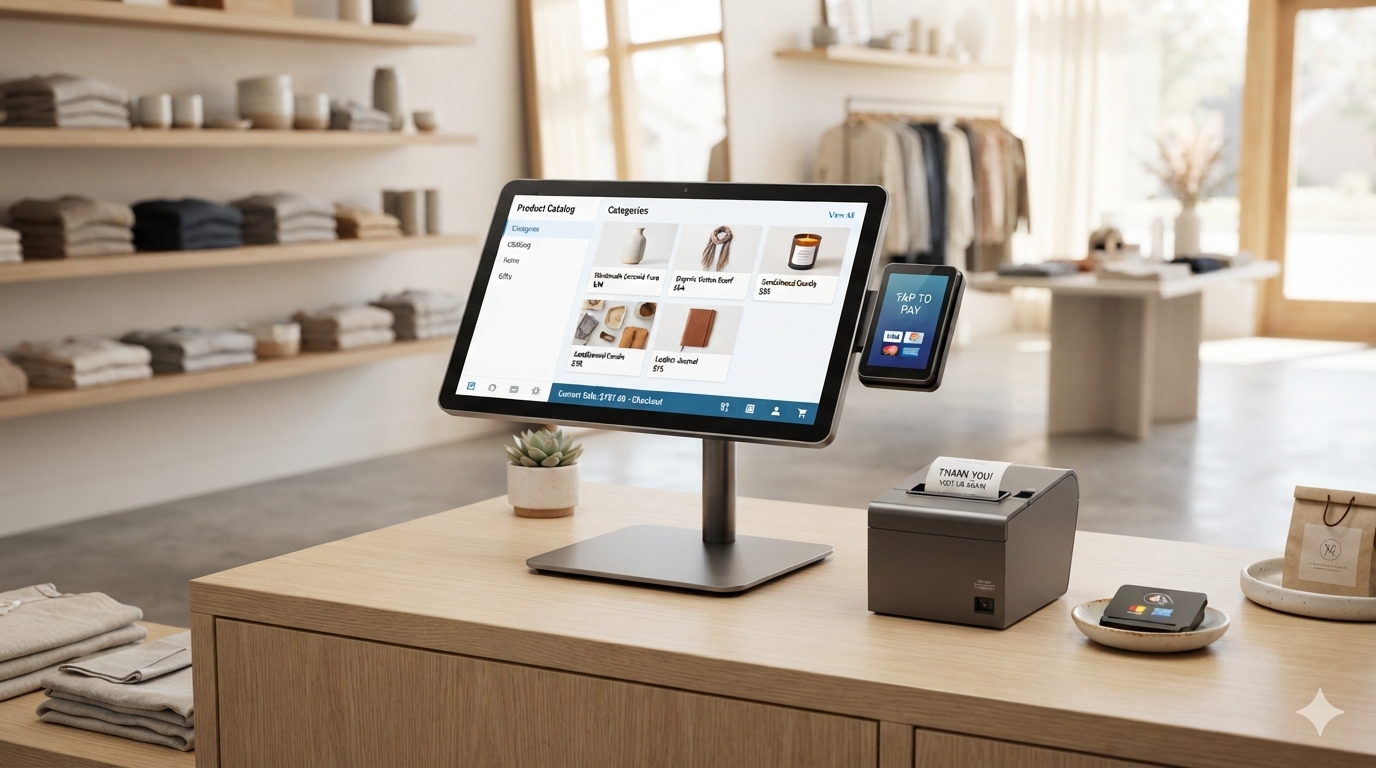
Manhattan Point of Sale Training
Build practical knowledge of retail point-of-sale workflows with Manhattan Point of Sale Training designed for aspiring professionals, experienced retail technology teams and organizations looking to strengthen their understanding of POS operations.
Modern retail businesses need reliable checkout processes, accurate transaction handling, consistent pricing and promotions, and effective coordination between store operations and wider retail systems. Understanding how a point-of-sale environment works can help professionals contribute to retail technology projects, operational improvements and implementation initiatives.
Our Manhattan Point of Sale Training program is designed to help learners develop structured knowledge of POS concepts, retail business processes, system workflows and integration considerations. Through online learning, instructor-led sessions and customized corporate training options, participants can explore the topics most relevant to their professional goals.
Whether you are beginning your retail technology journey, preparing for a project assignment or expanding your enterprise application skills, this course can be tailored to your existing experience and learning objectives.
Explore Manhattan Point of Sale Training and discuss a learning plan suited to your requirements.
Request Course Details] [CTA: Speak with a Training Advisor]
What Is Manhattan Point of Sale Training?
Manhattan Point of Sale Training focuses on understanding the business processes, workflows and technical considerations associated with point-of-sale operations in a retail environment. The program can introduce learners to checkout activities, transaction processing concepts, retail data flows and the relationship between POS applications and other enterprise systems.
Point-of-sale systems play an important role in retail operations. They support customer purchases, payment-related workflows, returns, discounts and other activities that need to be coordinated with store policies and business rules.
For professionals working with Manhattan Associates retail solutions, the precise product, release and implementation architecture matter. Training content should therefore be aligned with the specific Manhattan product or POS environment used by the learner or their organization.
This course is intended to provide practical, structured learning rather than unsupported claims about access to proprietary software or guaranteed certification outcomes.
Why Learn Manhattan Point of Sale?
Retail technology professionals increasingly need to understand how store-level transactions connect with inventory, pricing, customer service and back-office processes. POS knowledge helps learners understand these dependencies and communicate more effectively with business stakeholders, developers, testers and implementation teams.
Key learning benefits include:
- Understanding retail checkout and transaction workflows.
- Learning common POS business scenarios and operational requirements.
- Exploring pricing, promotions, refunds and transaction exception concepts.
- Understanding how POS systems exchange information with connected retail applications.
- Developing a foundation for functional testing and implementation discussions.
- Improving readiness for retail technology support and project assignments.
The value of training depends on the learner's existing experience, the selected course scope and the availability of relevant hands-on exercises.
Manhattan Point of Sale Training Modules
The training curriculum can be customized according to the learner's background, business requirements and the specific POS environment involved.
Module 1: Introduction to Retail POS
- Role of point-of-sale systems in modern retail.
- Store checkout processes and transaction lifecycles.
- Key retail stakeholders and business terminology.
- Overview of POS components and typical system architecture.
Module 2: POS Business Processes
- Sales transaction workflows.
- Product scanning and item entry concepts.
- Quantity changes, voids and transaction corrections.
- Transaction completion and receipt-related processes.
- Handling common checkout exceptions.
Module 3: Pricing, Discounts and Promotions
- Retail pricing concepts and price application.
- Promotion and discount scenarios.
- Customer-specific offers where supported.
- Understanding pricing discrepancies.
- Business rules and validation considerations.
Module 4: Payments, Returns and Refunds
- Overview of payment processing workflows.
- Cashless and other payment scenarios, depending on the environment.
- Returns, exchanges and refund business rules.
- Transaction cancellation and reversal concepts.
- Exception handling and reconciliation considerations.
Payment functionality varies by product, configuration and payment provider. Training exercises should reflect the relevant implementation rather than assume that every capability is available in every environment.
Module 5: Product and Retail Data
- Product identifiers and item information.
- Price and promotion data.
- Store and transaction reference data.
- Data consistency and validation.
- Common causes of missing or incorrect retail information.
Module 6: POS Integration Concepts
- Relationships between POS and retail enterprise applications.
- Transaction data exchange and synchronization.
- Inventory updates and sales visibility.
- Interface dependencies and integration monitoring.
- Troubleshooting concepts for failed or delayed data exchanges.
Specific integrations depend on the actual system architecture, licensed products and configured interfaces.
Module 7: Functional Testing and Troubleshooting
- Translating business requirements into test scenarios.
- Positive and negative test cases.
- Checkout, discount and return scenarios.
- Defect documentation and evidence collection.
- Root-cause investigation and retesting.
- Regression testing fundamentals.
Module 8: Implementation and Project Readiness
- Requirement gathering and process documentation.
- Understanding functional specifications.
- Configuration concepts where applicable.
- User acceptance testing preparation.
- Cutover, deployment and post-go-live support concepts.
- Working with business users and technical teams.
Module 9: Practical Scenarios and Knowledge Review
- End-to-end retail transaction walkthroughs.
- Scenario-based exercises.
- Troubleshooting discussions.
- Review of key concepts.
- Learner assessment and feedback.
The final module sequence, duration, practical exercises and software demonstrations should be confirmed before enrollment. Access to a live Manhattan environment is subject to availability and should not be assumed unless explicitly included in the training agreement.
Manhattan Point of Sale Online Training
Online Manhattan Point of Sale Training is suitable for learners who want to develop their retail technology knowledge without traveling to a physical classroom.
Remote sessions can accommodate participants in the USA, Canada, the UK, Germany, the Netherlands, Saudi Arabia, the UAE, Qatar, Singapore and Australia, subject to agreed schedules and trainer availability.
Online learning may include:
- Live virtual instructor sessions.
- Screen-sharing demonstrations where the relevant environment is available.
- Guided business-process walkthroughs.
- Scenario-based assignments and practice questions.
- Question-and-answer sessions.
- Revision materials and learning recommendations, as agreed.
- Training schedules can be discussed across suitable time zones. The actual session timings, course duration, recording availability and learning materials should be confirmed before booking.
Interested in learning remotely? Contact our training team to discuss your preferred schedule and learning objectives.
Enquire About Online Training]
Instructor-Led Manhattan POS Course
Instructor-led training provides opportunities to ask questions, discuss business scenarios and receive explanations based on the learner's experience and objectives.
A typical instructor-led learning plan may include a preliminary assessment, concept sessions, guided exercises, scenario discussions and a final knowledge review.
The course can be structured for beginners who need retail POS fundamentals or experienced professionals who want to strengthen their understanding of functional workflows, testing and implementation activities.
The trainer should confirm the specific product scope, teaching approach, practical environment and expected learning outcomes before the program begins.
Corporate Manhattan Point of Sale Training
Corporate training is designed for organizations that want to develop consistent POS knowledge across retail operations, business analysis, QA, support or implementation teams.
Training can be tailored around the organization's requirements, subject to trainer expertise and the availability of relevant product materials.
Corporate learning options may include:
- Customized training objectives and module selection.
- Cohort-based online sessions.
- Business-specific transaction scenarios.
- Functional testing and implementation workshops.
- Team knowledge assessments.
- Training schedules coordinated with business operations.
Organizations should share their current POS environment, project stage, learner experience and desired outcomes before requesting a proposal. This allows the training scope to be assessed more accurately.
Request Corporate Training Proposal]
Who Should Take This Course?
Manhattan Point of Sale Training may be useful for:
- Retail technology professionals seeking a stronger understanding of POS business processes.
- Functional consultants and business analysts who document retail requirements and workflows.
- QA engineers and software testers preparing test cases for checkout, pricing and returns.
- Application support professionals involved in investigating transaction or integration issues.
- Implementation consultants seeking structured learning about retail POS processes.
- Retail operations teams who need to understand the technology behind store transactions.
- IT professionals and career changers exploring enterprise retail applications.
Some modules may require prior retail, software testing or enterprise application knowledge. Course prerequisites should be confirmed based on the selected training level.
Real-World Use Cases
Retail Checkout Workflow
Understand the sequence of activities involved when a customer purchases products, including item entry, price application, transaction validation and checkout completion.
Discount and Promotion Validation
Explore how business rules affect transaction totals and how testers can verify expected results across different promotional scenarios.
Returns and Refunds
Review the business conditions that may govern returns, exchanges and refunds, along with exception handling and transaction traceability.
POS and Inventory Coordination
Learn why timely and accurate transaction data matters to inventory visibility, sales reporting and downstream retail operations.
Functional Testing and Quality Assurance
Develop structured test scenarios for normal transactions, invalid inputs, pricing exceptions and other relevant business conditions.
Implementation and Post-Go-Live Support
Understand how requirements, testing evidence, defect analysis and user feedback contribute to retail technology deployment and ongoing support.
These examples are learning scenarios, not claims that every workflow is available in every Manhattan product configuration.
Manhattan Point of Sale Implementation Training
Implementation-focused training helps learners understand the activities involved in preparing, validating and supporting a retail POS solution.
Topics may include requirement analysis, business-process mapping, functional documentation, test planning, integration dependencies, user acceptance testing and deployment readiness.
Learners can discuss common project challenges such as inconsistent pricing data, unexpected transaction results, interface failures and gaps between documented requirements and actual business workflows.
The course can also introduce the importance of stakeholder communication, issue prioritization, change control and post-implementation monitoring.
This training supports implementation knowledge but does not replace authorized product documentation, project-specific procedures or supervised experience in a live implementation.
Manhattan Point of Sale Certification Preparation
Professionals interested in certification should first identify the exact credential they intend to pursue and verify its current availability, eligibility requirements and examination process with Manhattan Associates or the relevant credential provider.
Our training can support certification preparation by reinforcing relevant retail POS concepts, explaining business workflows, reviewing key
terminology and providing scenario-based knowledge assessments where appropriate.
Certification preparation may include:
- Review of the identified certification syllabus, if available.
- A topic-by-topic learning plan.
- Practice questions created for learning purposes.
- Scenario-based revision and knowledge checks.
- Identification of areas that need further study.
Important: Do not assume that completing this training automatically awards an official Manhattan Associates certification. Any official credential, exam registration, authorized training status or certification fee must be verified separately. Certification-specific preparation should be confirmed before enrollment.
About the Trainer
The training program should be delivered by a trainer whose experience matches the selected course scope.
Before enrolling, learners can request information about the trainer's relevant retail technology experience, Manhattan product exposure, functional or implementation background, teaching approach and practical project knowledge.
Training may combine concept explanations, business scenarios, demonstrations where available and guided discussion. The exact trainer profile and delivery format should be shared with prospective learners before payment or enrollment.
At Techmunus, the training team can discuss your learning requirements and confirm the available trainer, course coverage, schedule and practical-learning options. Specific trainer credentials and project experience should be published only when verified.
Why Choose Techmunus for Manhattan POS Training?
Choosing a training provider involves more than reviewing a course title. Learners should understand what is included, who will teach the program and how the course relates to their professional objectives.
When evaluating this program, discuss the following with our team:
- Learning objectives: Agree on the concepts and workflows to be covered.
- Flexible delivery: Explore suitable online or instructor-led schedules.
- Relevant curriculum: Match modules to your role and prior knowledge.
- Practical learning: Confirm which exercises, demonstrations or environments are available.
- Transparent course scope: Understand prerequisites, duration, fees and included materials.
- Professional guidance: Discuss learning pathways and appropriate next steps after training.
Our team can help assess whether the proposed program aligns with your requirements before you make an enrollment decision.
International Training Availability
We welcome inquiries from professionals and organizations seeking remote retail technology training across multiple regions.
United States and Canada
Discuss online schedules that work across North American time zones and suit individual or corporate learning needs.
United Kingdom, Germany and the Netherlands
Explore instructor-led remote learning and course schedules suitable for European working hours.
Saudi Arabia, UAE and Qatar
Discuss training arrangements for retail technology professionals and enterprise teams in Gulf countries.
Singapore and Australia
Request suitable session timings and discuss how the course can accommodate your local working hours.
Training availability, trainer schedules, pricing, payment arrangements and time-zone options must be confirmed individually. These regional references describe intended service coverage and do not imply a physical training office in every country.
Frequently Asked Questions
1. What is Manhattan Point of Sale Training?
It is a structured learning program focused on retail POS concepts, transaction workflows, pricing, returns, testing and relevant integration or implementation considerations.
2. Can I take Manhattan POS Training online?
Online delivery may be available through live virtual sessions. Confirm the current schedule, trainer availability, course format and practical-learning arrangements before enrolling.
3. Who can enroll in this course?
Retail technology professionals, business analysts, functional consultants, testers, support teams, implementation professionals and suitable beginners can discuss enrollment based on their experience.
4. Do I need prior Manhattan product experience?
Not necessarily for introductory learning. Advanced functional or implementation modules may require relevant retail, testing or enterprise application knowledge.
5. Does the course include hands-on practice?
Practical exercises or demonstrations may be included depending on the agreed course plan and access to an appropriate training environment. Confirm these details in advance.
6. Will I receive an official Manhattan Associates certification?
Course completion should not be confused with official certification. Verify the credential, examination requirements and authorized certification pathway directly with the relevant provider.
7. Is corporate Manhattan POS Training available?
Organizations can enquire about customized team sessions, business scenarios, testing topics and implementation-focused learning. Availability depends on trainer capacity and the agreed scope.
8. How long does the training take?
Duration depends on the selected modules, learner experience, session frequency and practical requirements. Request a course plan for an accurate estimate.
9. Can professionals outside India join?
Remote training inquiries are welcome from the USA, Saudi Arabia, UAE, UK, Australia, Singapore, Canada, Germany, the Netherlands and Qatar, subject to confirmed delivery arrangements.
10. Does the training guarantee a job or placement?
No job, promotion or placement outcome should be assumed. Training is intended to develop knowledge and skills; employment decisions depend on individual experience, employer requirements and market conditions.
Enquire About Manhattan Point of Sale Training
Ready to develop your understanding of retail POS workflows and implementation concepts?
Contact Techmunus to discuss your current experience, learning objectives, preferred training format and schedule. Our team can help you understand the proposed course coverage before you decide whether to enroll.