
manhattan hub management training manhattan yard management training
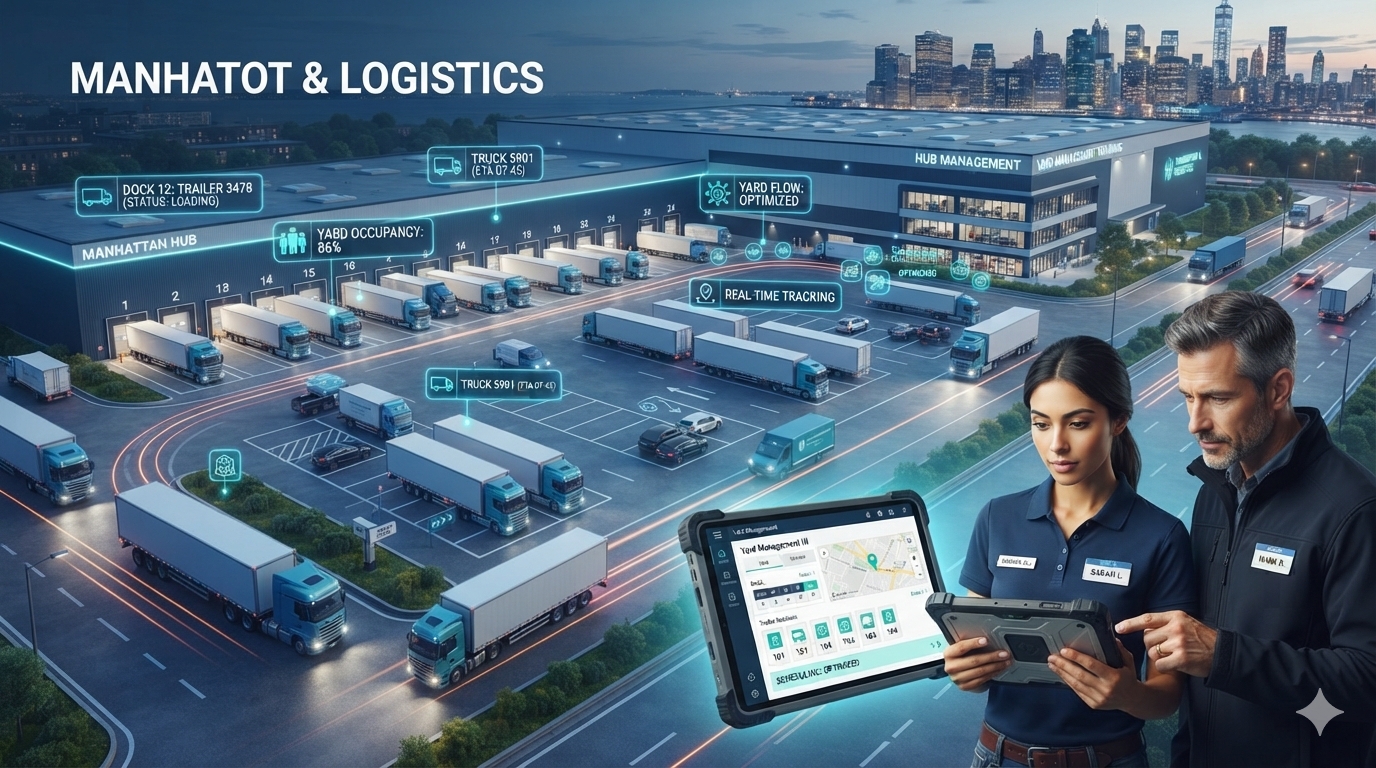
What Is Manhattan Hub Management and Yard Management?
Manhattan Hub Management and Manhattan Yard Management are important areas of supply chain and logistics operations that support the coordination and movement of goods across distribution networks.
Hub management focuses on coordinating activities within logistics hubs, distribution facilities and transfer locations. It involves understanding inbound and outbound movement, shipment coordination, operational visibility and the flow of goods between locations.
Yard management focuses on activities taking place outside and around warehouse or distribution center facilities. It helps organizations coordinate trailers, trucks, dock assignments, vehicle movements and yard resources.
When these operational areas are managed effectively, businesses can improve coordination, reduce unnecessary movement, support better resource utilization and maintain visibility across logistics operations.
Understanding Hub Management
Hub management involves coordinating the movement of products and shipments through designated logistics hubs. These facilities may function as consolidation points, transfer centers or distribution locations.
Important operational areas include:
- Inbound shipment coordination.
- Outbound shipment processing.
- Hub-to-hub transfer activities.
- Shipment tracking and visibility.
- Operational planning and coordination.
- Exception identification and resolution.
- Coordination between warehouse and transportation teams.
Understanding Yard Management
Yard management helps businesses organize and monitor vehicle and trailer activities within logistics facilities.
Its operational scope can include:
- Vehicle arrival and departure management.
- Trailer tracking and identification.
- Dock and door allocation.
- Yard movement coordination.
- Loading and unloading visibility.
- Yard capacity management.
- Exception and delay management.
Our training connects these concepts to practical supply chain workflows and helps learners understand how hub and yard activities contribute to broader warehouse and transportation operations.
Why Learn Manhattan Hub Management and Yard Management?
Supply chain organizations increasingly depend on integrated technology platforms to manage complex distribution activities.
Professionals who understand logistics workflows, warehouse operations and transportation coordination can contribute to business process improvement and technology implementation projects.
Learning Manhattan Hub Management and Yard Management can help you:
- Understand logistics hub and distribution workflows.
- Develop knowledge of yard operations and trailer management.
- Understand inbound and outbound coordination.
- Learn dock scheduling and vehicle movement concepts.
- Understand warehouse and transportation integration.
- Identify operational challenges and possible process improvements.
- Build knowledge relevant to Manhattan-related supply chain projects.
The training is suitable for professionals who want to strengthen their existing experience as well as beginners who want structured exposure to supply chain management concepts.
Manhattan Hub Management and Yard Management Training Modules
The course is organized into functional learning modules. The exact topics and depth can be customized depending on the learner's experience, project requirements and training objectives.
Module 1: Introduction to Manhattan Supply Chain Solutions
- Overview of Manhattan supply chain solutions.
- Understanding warehouse and distribution operations.
- Introduction to hub and yard management concepts.
- Supply chain operational terminology.
- Role of technology in logistics management.
- Understanding business process requirements.
Module 2: Hub Management Fundamentals
- Introduction to hub operations.
- Understanding logistics hub structures.
- Inbound and outbound shipment workflows.
- Hub transfer and consolidation concepts.
- Shipment movement and coordination.
- Hub operational visibility.
- Understanding hub-related exceptions.
Module 3: Hub Operations and Process Management
- Shipment receiving and processing concepts.
- Shipment sorting and movement.
- Transfer coordination.
- Shipment status monitoring.
- Operational workflow management.
- Hub performance and productivity concepts.
- Exception handling and resolution.
Module 4: Yard Management Fundamentals
- Introduction to yard management.
- Understanding yard layouts and operational zones.
- Vehicle and trailer identification.
- Yard inventory and visibility concepts.
- Gate-in and gate-out processes.
- Yard resource utilization.
- Understanding yard operational requirements.
Module 5: Trailer and Vehicle Management
- Trailer arrival and departure workflows.
- Trailer tracking concepts.
- Vehicle assignment and movement.
- Trailer positioning and relocation.
- Yard visibility and monitoring.
- Vehicle status management.
- Handling operational exceptions.
Module 6: Dock and Door Management
- Understanding warehouse docks and doors.
- Dock assignment concepts.
- Loading and unloading coordination.
- Dock utilization.
- Vehicle-to-dock coordination.
- Dock availability and scheduling.
- Operational bottleneck identification.
Module 7: Hub and Yard Process Integration
- Understanding warehouse and yard coordination.
- Inbound transportation integration.
- Outbound shipment coordination.
- Hub-to-distribution center movement.
- Yard-to-dock workflows.
- Cross-functional operational visibility.
- Understanding integrated supply chain processes.
Module 8: Configuration and Functional Understanding
- Understanding business requirements.
- Functional workflow discussions.
- Process configuration concepts.
- Operational rules and parameters.
- Master data considerations.
- Understanding system dependencies.
- Functional testing considerations.
Module 9: Testing and Implementation Concepts
- Requirement analysis.
- Functional test scenario preparation.
- Unit and integration testing concepts.
- User acceptance testing (UAT).
- Defect identification and documentation.
- Implementation planning.
- Go-live preparation.
- Post-implementation support concepts.
Module 10: Real-World Scenarios and Practical Learning
- Managing unexpected vehicle arrivals.
- Handling trailer assignment challenges.
- Addressing dock availability issues.
- Improving shipment movement coordination.
- Understanding hub processing delays.
- Managing operational exceptions.
- Discussing process improvement opportunities.
Manhattan Hub Management and Yard Management Online Training
Techmunus provides online Manhattan Hub Management and Yard Management training for learners across different countries and time zones.
Our online training approach is designed to offer flexibility without compromising the learning experience.
Key features include:
- Live online instructor-led sessions.
- Interactive trainer discussions.
- Practical business process examples.
- Structured module-wise learning.
- Question-and-answer sessions.
- Flexible scheduling based on availability.
- Training for working professionals.
- Learning support based on the selected program.
Whether you are based in the United States, Saudi Arabia, UAE, UK, Australia, Singapore, Canada, Germany, Netherlands or Qatar, you can enquire about suitable online training schedules.
Instructor-Led Manhattan Training
Instructor-led training provides learners with direct interaction with an experienced trainer.
During the program, learners can discuss functional workflows, clarify technical concepts, understand operational scenarios and ask questions related to their professional requirements.
The training can be tailored for:
- Individual professionals.
- Fresh graduates.
- Experienced supply chain professionals.
- Manhattan technology learners.
- Implementation and support teams.
- Consultants working on logistics projects.
Corporate Manhattan Hub and Yard Management Training
Organizations implementing or supporting Manhattan-related supply chain solutions may require customized training for their employees.
Techmunus offers corporate training programs that can be aligned with organizational learning objectives.
Corporate training areas may include:
- Functional process understanding.
- Hub management workflows.
- Yard management operations.
- Warehouse and transportation coordination.
- Implementation knowledge.
- Testing and support concepts.
- Role-specific learning plans.
- Project-oriented practical discussions.
Corporate programs can be structured for small teams, large groups and professionals with different experience levels.
Who Should Take Manhattan Hub Management and Yard Management Training?
This training is suitable for individuals who want to develop or improve their understanding of logistics, distribution and supply chain technology.
Supply Chain Professionals
Professionals involved in supply chain planning, logistics coordination, distribution and transportation operations can improve their understanding of hub and yard workflows.
Warehouse and Distribution Managers
Warehouse supervisors, distribution center managers and operational team leaders can learn how yard and hub processes connect with warehouse activities.
Manhattan WMS Professionals
Professionals working with Manhattan Warehouse Management System solutions can expand their knowledge of related logistics and operational processes.
Functional Consultants
Functional consultants can develop a better understanding of business requirements, process workflows, operational scenarios and implementation discussions.
IT Professionals and Developers
IT professionals interested in enterprise supply chain solutions can gain functional knowledge to support technology-related project discussions.
Freshers and Career Changers
Beginners interested in supply chain technology can use this course to develop foundational knowledge of logistics operations and enterprise supply chain processes.
Real-World Use Cases of Manhattan Hub and Yard Management
Understanding practical business situations is an important part of professional training.
The following examples illustrate how hub and yard management concepts are applied in logistics environments.
Use Case 1: Managing High-Volume Vehicle Arrivals
A distribution center receives multiple vehicles within a short period. Without proper coordination, vehicles may wait unnecessarily, creating congestion.
Yard management processes help businesses understand vehicle arrivals, yard positioning, dock allocation and movement coordination.
Use Case 2: Improving Trailer Visibility
A logistics organization manages multiple trailers across its yard. Operations teams need to know where trailers are located and which trailers are ready for loading or unloading.
Yard visibility concepts help teams coordinate trailer activities and improve operational awareness.
Use Case 3: Coordinating Hub Transfers
A business transfers shipments between regional logistics hubs. Delays or incorrect shipment coordination can affect downstream deliveries.
Hub management concepts help professionals understand shipment movement, transfer coordination and operational monitoring.
Use Case 4: Reducing Dock Congestion
A warehouse experiences delays because multiple vehicles require dock access simultaneously.
Understanding dock allocation, scheduling and yard coordination can help businesses identify operational bottlenecks.
Use Case 5: Supporting Distribution Network Efficiency
Organizations managing multiple distribution locations require coordination between transportation, warehouse and hub operations.
Integrated process knowledge helps professionals understand the dependencies between these functions.
Manhattan Hub Management and Yard Management Implementation Training
Implementation-oriented learning is valuable for professionals who want to understand how enterprise supply chain systems are introduced and supported within organizations.
Our Manhattan implementation training covers conceptual and functional areas involved in project delivery.
Requirement Gathering
Learn how business requirements are collected from warehouse, transportation and logistics stakeholders.
Business Process Mapping
Understand how existing operational workflows are documented and compared with proposed system processes.
Functional Design Understanding
Learn how functional requirements, workflows and operational rules are translated into system-related discussions.
Testing and Validation
Understand how functional testing, integration testing and UAT help validate business requirements.
Go-Live Preparation
Explore deployment readiness, operational coordination, issue tracking and user preparation.
Post-Implementation Support
Understand common support activities, issue analysis, process clarification and continuous improvement.
Note: The training provides learning and implementation guidance. It does not represent official Manhattan Associates implementation authorization or a guarantee of project deployment access.
Manhattan Hub Management and Yard Management Certification Preparation
Professionals often look for certification-oriented training to strengthen their knowledge and demonstrate their understanding of enterprise supply chain technologies.
Our Manhattan Hub Management and Yard Management training can include certification preparation guidance based on the learner's objectives and the relevant certification requirements.
The preparation may cover:
- Core hub management concepts.
- Yard management workflows.
- Logistics and transportation processes.
- Warehouse coordination.
- Functional terminology.
- Business scenario discussions.
- Practice questions and knowledge reviews.
- Interview preparation.
- Concept revision and mock assessments.
Is There an Official Manhattan Hub or Yard Management Certification?
Learners should distinguish between a training completion certificate and an official vendor-issued certification.
Techmunus provides training and learning guidance. Completion certificates, where included in a selected program, are issued according to the training provider's policy.
Any official Manhattan Associates certification, examination or credential should be verified directly through Manhattan Associates and its current authorized certification channels.
Our trainers can help learners understand relevant subject areas and prepare for professional assessments where applicable.
About the Trainer
Learn from an experienced industry trainer with practical exposure to supply chain management, warehouse operations, logistics workflows and enterprise technology concepts.
The training approach focuses on connecting theoretical knowledge with practical business scenarios so learners can understand how hub and yard management concepts are applied in real operational environments.
Trainer-led learning may include:
- Structured topic-wise explanations.
- Business process discussions.
- Real-world logistics scenarios.
- Functional workflow demonstrations, where available.
- Practical problem-solving discussions.
- Interview-oriented preparation.
- Guidance based on learner experience.
At Techmunus, we emphasize an interactive learning environment that encourages learners to ask questions and understand the reasoning behind business processes.
Trainer profiles, relevant experience, credentials and project exposure should be displayed on the published page only after verification.
Why Choose Techmunus for Manhattan Training?
Choosing the right training provider is important when investing time and resources in professional development.
Techmunus focuses on delivering structured enterprise technology training that addresses practical business and professional learning requirements.
Reasons to explore our training include:
- Flexible learning: Online learning options for international participants.
- Instructor interaction: Opportunities to discuss concepts with trainers.
- Structured modules: Organized learning paths covering important topics.
- Practical understanding: Business scenarios and workflow discussions.
- Corporate learning: Training programs tailored to organizational requirements.
- Implementation knowledge: Exposure to functional and project-related concepts.
- Professional development: Learning support for career advancement and skill enhancement.
Our goal is to help learners develop meaningful subject knowledge that they can apply in their professional environments.
International Online Training Availability
Techmunus welcomes training enquiries from professionals and organizations across international markets.
|
Country / Region |
Training approach |
|
USA |
Online instructor-led sessions |
|
Saudi Arabia |
Flexible online schedules |
|
UAE |
Individual and corporate training |
|
UK |
Time-zone-based scheduling |
|
Australia |
Flexible online learning |
|
Singapore |
Professional training |
|
Canada |
Online and corporate programs |
|
Germany |
International online training |
|
Netherlands |
Instructor-led online learning |
|
Qatar |
Individual and team training |
Training availability, batch timings and program structure can be discussed according to the learner's location and requirements.
Frequently Asked Questions (FAQs)
1. What is Manhattan Hub Management Training?
Manhattan Hub Management Training is a professional learning program focused on understanding logistics hub operations, shipment coordination, inbound and outbound workflows, hub transfers and distribution processes.
2. What is Manhattan Yard Management Training?
Manhattan Yard Management Training covers yard operations such as vehicle tracking, trailer management, gate processes, dock allocation, loading coordination and yard visibility.
3. Is Manhattan Hub and Yard Management Training available online?
Yes. Techmunus offers online instructor-led training options for learners across international locations. Training schedules can be discussed based on availability and time zones.
4. What topics are covered in the Manhattan Hub Management course?
The course may cover hub fundamentals, shipment processing, inbound and outbound workflows, hub transfers, operational monitoring, exception handling and process integration.
5. What will I learn in the Manhattan Yard Management course?
You can learn vehicle arrival management, trailer tracking, gate-in and gate-out workflows, dock allocation, yard movement, loading coordination and operational visibility.
6. Who can join this Manhattan training program?
Supply chain professionals, warehouse managers, logistics specialists, functional consultants, IT professionals, fresh graduates and individuals interested in enterprise supply chain technology can join.
7. Does the course include implementation training?
Yes. Implementation-oriented topics can include requirement gathering, business process mapping, functional design concepts, testing, UAT, go-live preparation and post-implementation support.
8. Is corporate Manhattan Hub and Yard Management training available?
Yes. Corporate training can be customized according to organizational requirements, employee experience levels, project needs and learning objectives.
9. Does Techmunus provide certification after training?
Certificate availability depends on the selected training program. Any Techmunus training completion certificate is separate from an official Manhattan Associates certification.
10. Do I need prior Manhattan experience?
Prior experience is helpful but not compulsory for introductory learning. The course structure can be adjusted according to your existing knowledge and professional background.
11. Can international students join Manhattan online training?
Yes. Learners from the USA, UAE, Saudi Arabia, UK, Australia, Singapore, Canada, Germany, Netherlands and Qatar can enquire about online training schedules.
12. How can I enquire about Manhattan Hub and Yard Management Training?
You can contact Techmunus through the website enquiry form to discuss course modules, trainer availability, batch schedules, fees and customized learning requirements.